
How to Source Balinese Wood Carvings Wholesale: A Direct Buyer's Guide
If you are a retailer, interior designer, or hospitality buyer looking to stock authentic Balinese wood carvings, you have probably already noticed the problem: most suppliers online are aggregators, middlemen, or agents who add margin at every step. The pieces arrive without a clear story, and the price does not reflect the actual craft.
This guide is written by Gungde, founder of Bali Things, who was born in Batuan Village in Gianyar — one of the oldest craft-producing areas in Bali. The goal here is simple: to give international wholesale buyers a clear, practical understanding of how Balinese wood carving sourcing actually works, what to look for, and how to do it directly.
"Most international buyers pay two or three times more than they need to — not because the product is expensive, but because they are buying through the wrong people."
1. Understanding Where Balinese Wood Carvings Come From
Bali is not a single craft source. The island is a network of specialised villages, each with its own material traditions, carving styles, and generational knowledge. Understanding this geography is the first step to sourcing intelligently.
The Key Carving Villages
The three areas most relevant for wholesale wood carving buyers are:
- Mas Village (Ubud area) — the most internationally recognised woodcarving village, known for figurines, masks, and decorative statues. Artisans here work primarily in teak and suar wood.
- Andong — known for decorative and functional handicraft, often lighter in weight and more commercially oriented. Good for high-volume retail sourcing.
- Batuan Village (Gianyar) — historically a painting and sculpture village with a strong tradition of intricate, spiritually symbolic carving. Less commercially visible than Mas, but producing some of the most distinctive work on the island.
The distinction matters for buyers because each village produces a different aesthetic character. A hotel sourcing pieces for a lobby needs a different type of carving than a homeware retailer filling a product range. Knowing which village produces what allows you to match your brief to the right source.
The Material Question
Wood choice affects price, durability, and export eligibility. The most common materials you will encounter:
- Teak — the most durable, most export-friendly, and typically the most expensive. Widely recognised internationally and straightforward to clear through UK, EU, and Australian customs.
- Suar wood (rain tree) — rich natural grain, medium weight, excellent for decorative pieces. Common in mid-range wholesale.
- Albesia — a lighter, fast-growing wood used for painted or lacquered pieces. Lower price point, good for high-volume retail orders.
- Jackfruit wood — dense, warm-toned, traditionally used for ceremonial carvings. Less common in wholesale but produces distinctive pieces.
2. The Supplier Landscape: Who You Are Actually Buying From
The biggest source of confusion for international buyers is not what to buy — it is understanding who they are dealing with. The supply chain between a Balinese artisan family and a UK retailer typically has three or four layers, each adding cost and removing story.
Layer 1: The Artisan Family
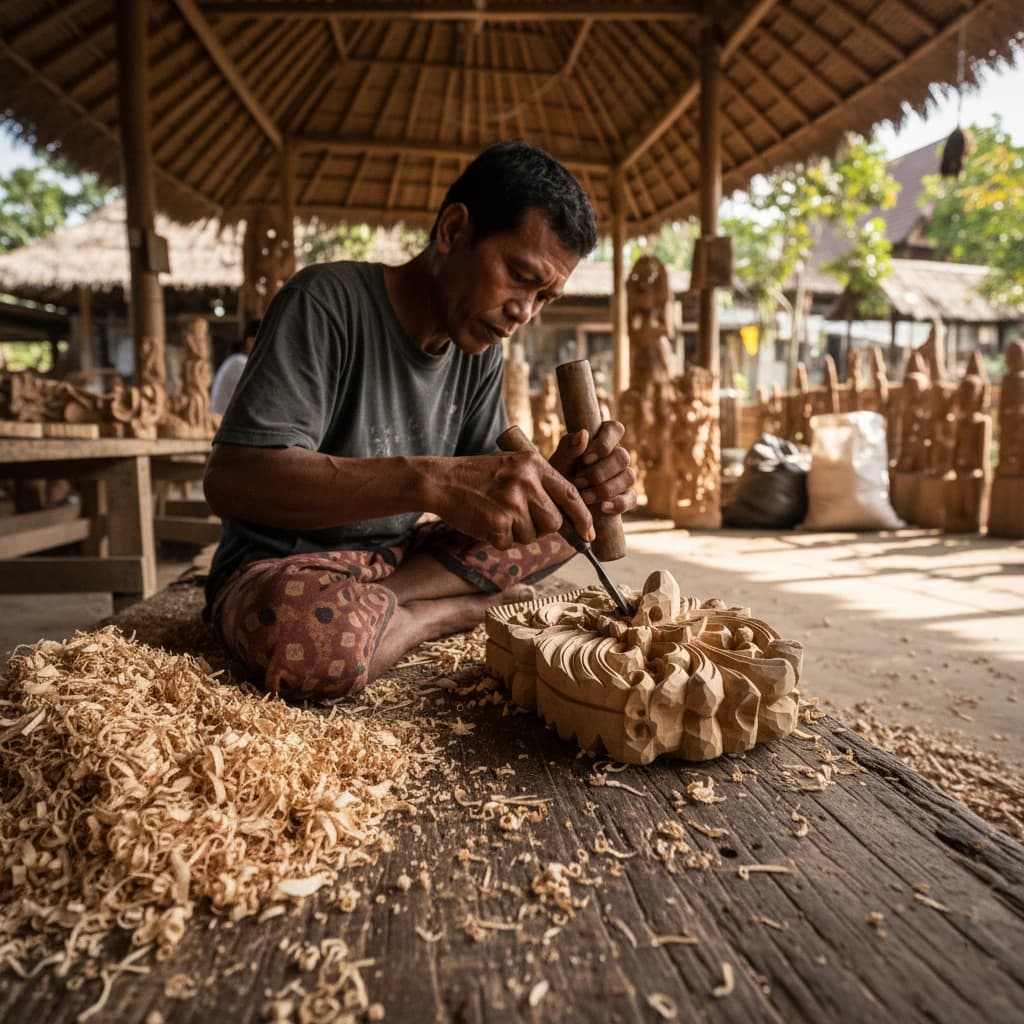
This is where the carving actually happens. In most craft villages, production is family-based. A master carver — often with 20 or 30 years of experience — works with two or three family members or apprentices. These families do not typically speak English, do not maintain websites, and do not handle export logistics. Their prices are the lowest, their stories are the richest, and accessing them directly requires either being physically in Bali or working with someone who is.
Layer 2: The Village Collector
Local collectors aggregate pieces from several artisan families and sell to exporters or agents. They handle a degree of quality control and consolidation. This is the first layer where markup appears — typically 30 to 50 percent above artisan price.
Layer 3: The Exporter / Agent
Export agents handle documentation, consolidation, and international shipping arrangements. Many also maintain English-language websites and showrooms. This is where most international buyers end up, often paying double or more of the artisan price by this point.
Layer 4: The Import Distributor
Some buyers in the UK, Netherlands, and Australia purchase through local import distributors who have already brought the goods into the country. Maximum convenience, maximum markup. Expect to pay three to five times the artisan price at this layer.
"The direct-from-artisan model is not just a cost advantage — it is a story advantage. Your customers are increasingly buying the narrative as much as the object."
3. What Direct Wholesale Sourcing Actually Looks Like
Sourcing directly from artisan families — or from a supplier with genuine direct relationships — changes the economics and the product experience significantly. Here is what it looks like in practice.
Minimum Order Quantities
At artisan level, MOQs are lower than most buyers expect. For standard decorative carvings, most families can fulfil orders from as few as 5 to 20 pieces per design. For custom or made-to-order work, lead times are typically 4 to 8 weeks depending on complexity.
Pricing Benchmarks
Wholesale pricing for Balinese wood carvings varies significantly by material, complexity, and size. As a general guide for buyers:
- Small decorative pieces (under 30cm) — wholesale range typically $8 to $25 USD per piece at source.
- Medium statement pieces (30-60cm) — $25 to $80 USD depending on intricacy and wood type.
- Large feature pieces (60cm+) — $80 to $300+ USD, with teak commanding the highest prices.
These figures represent direct-from-artisan or very-close-to-artisan pricing. Agent and distributor pricing layers typically sit 100 to 200 percent above these benchmarks.
4. What to Look for in a Balinese Wood Carving Supplier
Not all suppliers claiming to offer "direct from artisan" pricing actually have artisan-level relationships. Here are the signals that separate genuine direct-source operations from agents presenting themselves as something they are not.
- They can name the village and the artisan family producing your pieces — not just "Bali" or "Ubud."
- They can show you the workshop, either through photos, video, or in-person visits. Genuine craft operations are proud to show their workspace.
- They understand the craft tradition, not just the product catalogue. Ask about the carving technique for a specific piece. If the answer is vague, that is a signal.
- Lead times are realistic. Artisan-made pieces take time. A supplier promising any design in any quantity within 2 weeks is not working directly with carvers.
- Their pricing is consistent with artisan-level benchmarks. If prices seem unusually low or unusually high with no clear explanation, ask for a breakdown.
5. Matching Wood Carving Styles to Your Buyer Type
Balinese wood carving is not a single aesthetic. The range spans from intricate traditional religious sculpture to contemporary minimalist decorative pieces. Matching the right style to your customer base is as important as finding the right price.
For Homeware and Gift Retailers
Mid-size decorative pieces in suar or teak wood sell well in homeware retail contexts. Animals, abstract forms, masks, and decorative bowls are consistent performers. Finished in natural wood tones or simple lacquers, these pieces have broad consumer appeal without requiring the buyer to have specialist knowledge of Balinese art.
For Interior Designers and Hospitality Projects
Hotel lobbies, boutique villa interiors, and high-end residential projects need statement pieces with clear provenance and distinctive character. For this market, larger teak carvings, relief wall panels, and ceremonial-style figurines are the right product focus. The story of who made the piece and where — the village, the artisan, the tradition — is part of what the designer is selling to their client.
For Curated Concept Stores and Ethical Retailers
Buyers in this category are specifically looking for the artisan narrative, the heritage connection, and the sustainability credentials. They want to know that purchasing the piece directly supports a craft family, that the wood is responsibly sourced, and that the skill involved is genuinely endangered rather than industrially produced. This is where direct-from-artisan sourcing becomes a genuine commercial advantage rather than just a cost benefit.
Ready to Source Direct from Bali?
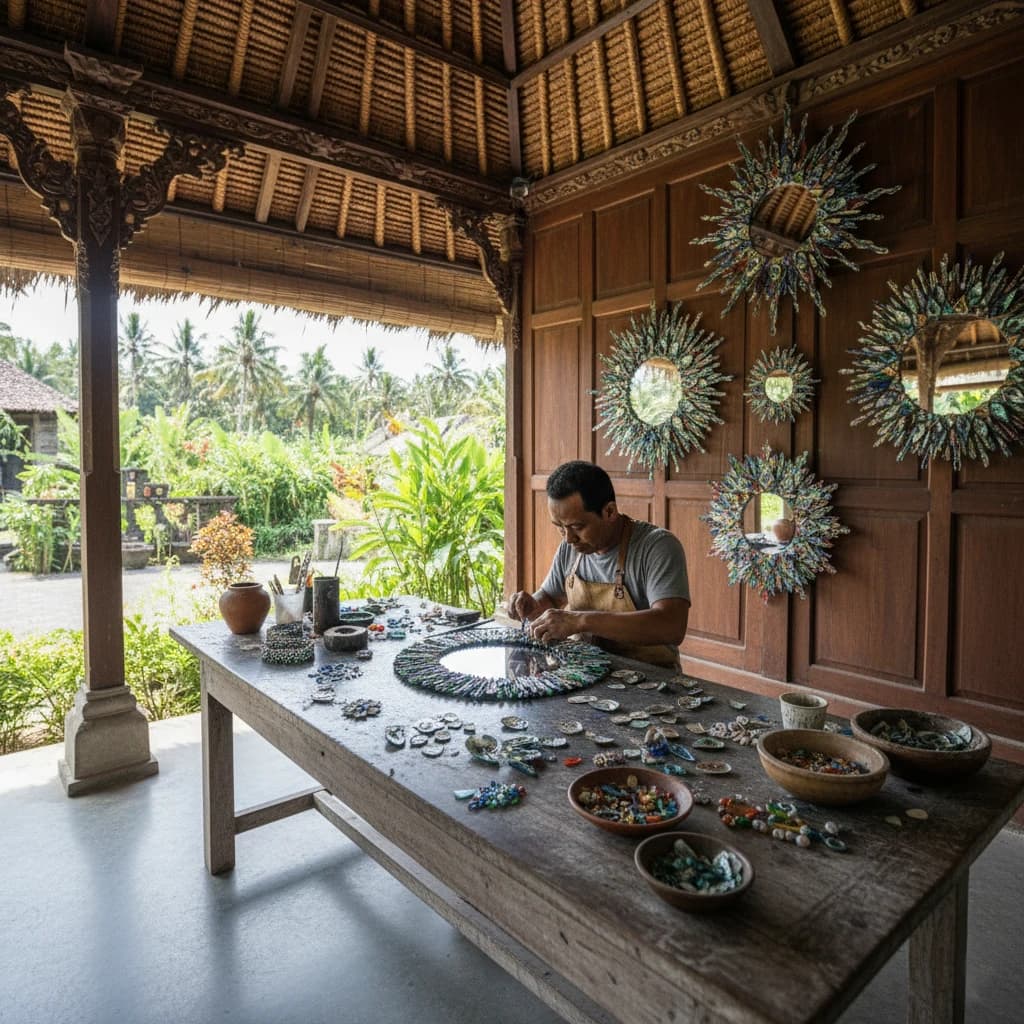
Bali Things works directly with artisan families in Batuan Village and across Gianyar, Bali — with no middlemen between the carver and your order. Our wholesale catalogue covers wood carvings, decorative mirrors, traditional paintings, and arts and crafts pieces, all available for international wholesale orders. To request our wholesale catalogue, discuss a specific brief, or ask about minimum order quantities and lead times, reach us directly at [email protected] or +62 813 3907 9357 (WhatsApp).
Explore Related Products
Wood Carving
Hand-carved masterpieces from Balinese artisans using traditional techniques passed down through generations.
Browse Wood Carving